The Power and Paradox of Oxytocin: Understanding the ‘Love Hormone’ and Its Impact on Us and Them
Oxytocin, often dubbed the ‘love hormone,’ is a powerful neuropeptide that plays a crucial role in social bonding, emotional intimacy, and trust. Produced in the hypothalamus and released into the bloodstream via the pituitary gland, oxytocin is instrumental in facilitating connections between individuals. It helps mothers bond with their newborns, strengthens romantic relationships, and enhances friendships. Indeed, oxytocin is the glue that binds us together, fostering a sense of ‘us.’
The Bright Side of Oxytocin: Bonding and Belonging
Oxytocin’s most celebrated function is its role in bonding. Research has shown that oxytocin levels increase during physical touch, such as hugging or holding hands, and during positive social interactions. This hormone promotes empathy, trust, and social bonding. For example, a study published in the journal Psychoneuroendocrinology found that an intranasal does of oxytocin enhanced empathy and trust in participants, leading to more cooperative behavior1.
In educational settings, oxytocin can significantly enhance the learning environment. Students who feel connected to their peers and teachers are more likely to engage actively in their studies, exhibit pro-social behaviour, and perform better academically. By fostering a sense of community and belonging, oxytocin helps create a supportive
and collaborative atmosphere in schools.
The Dark Side of Oxytocin: Us vs. Them
However, the influence of oxytocin is not purely benevolent. While it fosters strong in-group bonds, it can also intensify out-group biases. This dual nature of oxytocin was highlighted in a study conducted by researchers at the University of Amsterdam, published in Science. The study found that participants who received oxytocin were more likely to display defensive aggression toward out-group members, suggesting that the same hormone that binds us can also divide us2.
In my work, I often demonstrate how quickly this division can occur by dividing participants into arbitrary groups—based on gender, whether they wear glasses, have pets, have siblings, or support different sports teams. It’s startling to see how quickly these groups form an ‘us’ and engage in good-natured banter with the ‘them.’ Even in the safe environments of workplaces and classrooms, these divisions can emerge rapidly, highlighting how easily oxytocin can reinforce in-group loyalty and out-group exclusion.
The Consequences of Division: Lessons from Recent Unrest
The recent unrest witnessed in many cities across the UK is a stark reminder of the consequences when the ‘us vs. them’ mentality spirals out of control. When people feel unsafe, ignored, or aggrieved, and are fed alarming misinformation about the ‘other,’ the divisions can lead to significant societal unrest. This is a clear manifestation of the dark side of oxytocin, where the hormone’s bonding properties inadvertently fuel conflict and aggression toward perceived outsiders.
Teaching Children to Break Down Barriers
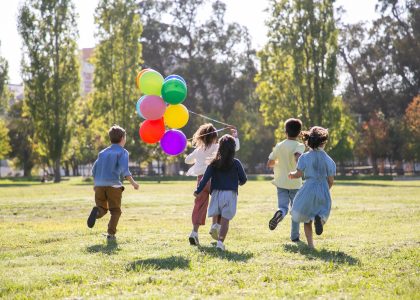
It is crucial to teach children about the power of oxytocin and its impact on behaviour. By understanding how easily groups can form and divide, children can learn to navigate these dynamics positively. One effective strategy is to constantly mix groups in classrooms, encouraging students to find common ground with new peers. Activities that involve sharing interests, common goals, food, joy, and laughter help break down barriers and reinforce the idea that there is no ‘them,’ only ‘us.’
As adults, we can learn from the wisdom of children. Instead of involving them in the violence and division seen in the media, we should let them guide us towards unity. By fostering an environment where everyone is seen as part of one big ‘us,’ we can counteract the divisive tendencies amplified by oxytocin and build a more inclusive and empathetic society.
While oxytocin is a powerful force for good, promoting bonding and empathy, it also has a darker side that can foster division and conflict. By understanding and teaching the dual nature of this ‘love hormone,’ we can harness its positive aspects while mitigating its potential for harm. Let us strive to create environments, both in schools and beyond, where the boundaries between ‘us’ and ‘them’ are constantly shifting, leading to greater unity and understanding.
Footnotes
Hurlemann, R., Patin, A., Onur, O. A., Cohen, M. X., Baumgartner, T., Metzler, S., … & Kendrick, K. M. (2010). Oxytocin enhances amygdala-dependent, socially reinforced learning and emotional empathy in humans. Psychoneuroendocrinology, 35(9), 1416-1424. doi:10.1016/j.psyneuen.2010.04.002 ↩
De Dreu, C. K., Greer, L. L., Van Kleef, G. A., Shalvi, S., & Handgraaf, M. J. (2011). Oxytocin promotes human ethnocentrism. Science, 328(5984), 1408-1411. doi:10.1126/science.1189047 ↩